1. David B., Callaham D., McGrath D., Strassburg J., Hilfiker T and Tackabury J.; 2010. An evaluation of the rate of disinfection of various multi-purpose solutions and a hydrogen peroxide solution using the ISO 14729 Standard. 2. Data on file. Bausch + Lomb Incorporated. Rochester, New York, USA 3. Moses, R.A., Hart, W.M., Adler’s; 1987. Physiology of the e ye. Clinical Application. (p.8) 4. Burke, S.E., Fridman, K.M., Scheuer, C.A., Barniak, V.L.; 2010. Physical properties of Contact Lens Disinfecting Solutions 5. Biotrue® MPS IFU. 6. Berry, M., Corfield A. P.; 1994. Evidence of hyaluronan in human tears and secretions of conjunctival cultures. 7. C.A. Scheuer et al., 2010. Retention of conditioning agent hyaluronan on hydrogel contact lenses. 8. Barniak V.L., Burke S.E., Vernkatesh S.; 2010. Contact Lens & A nterior Eye publication: “Comparative evaluation of multi-purpose solutions in the stabilization of tear. lysozyme”. 9. M. Jones, A. YaYa, D. Heiler; 2016. Protein Removal Study w ith Biotrue Multi-Purpose Solution. 10. Burke, S.E., Scheuer, C.A., Barniak, V.L.; 2010. Impact of Contact Lens Disinfecting Solutions on the Native State of a Tear Film Protein
*Wyniki badania in vitro przeprowadzonego w celu oceny uwalniania się hialuronianu z materiałów hydrożelowych (polymacon, alphafilcon A, etafilcon A) oraz silikonowo-hydrożelowych (balafilcon A, senofilcon A, galyfilcon A, comfilcon A, and lotrafilcon B) w ciągu 20-godzinnego okresu.
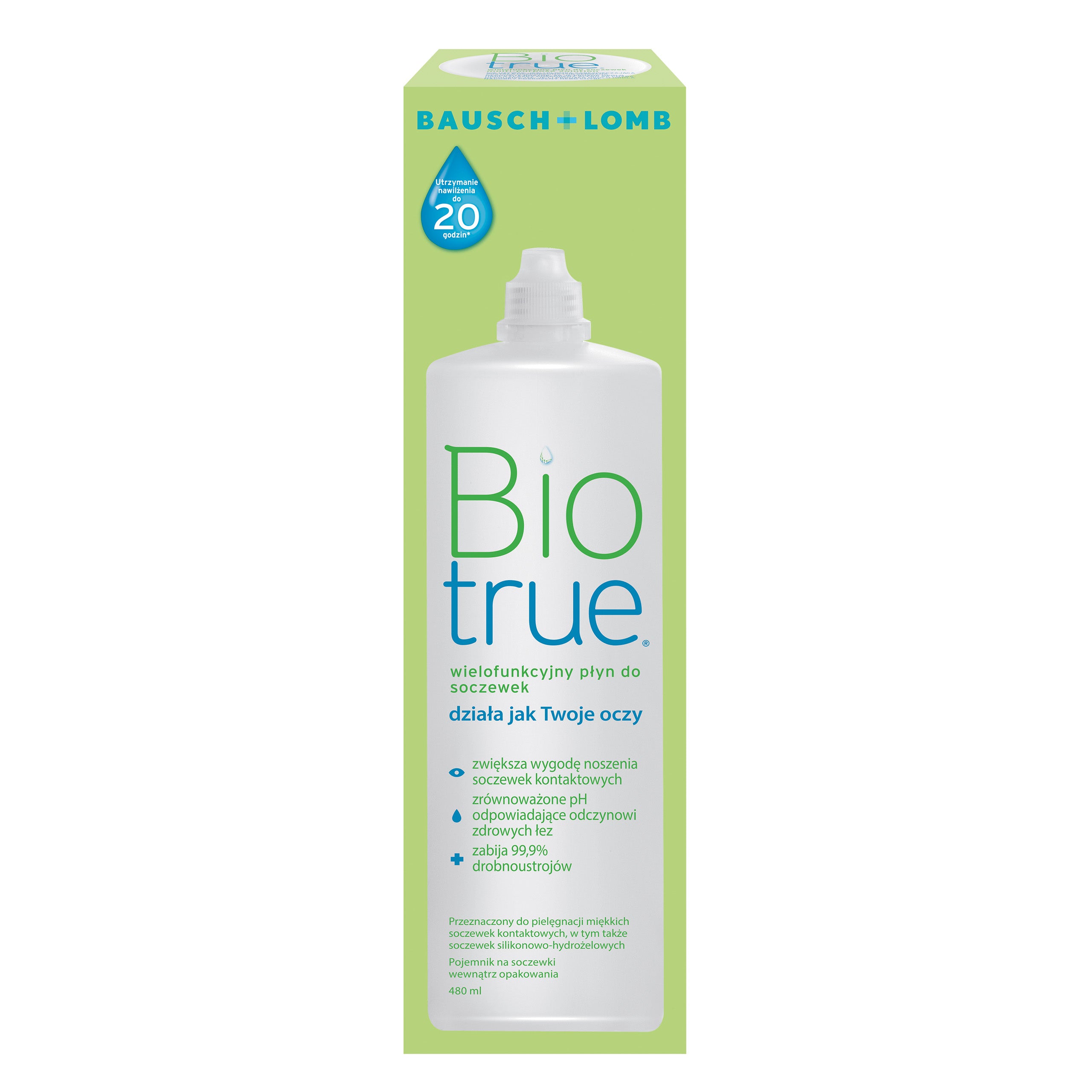
Wielofunkcyjny płyn Biotrue® jest przeznaczony do codziennego pielęgnowania i czyszczenia, usuwania osadów białkowych, płukania, dezynfekcji chemicznej (nie termicznej) oraz przechowywania miękkich (hydrofilowych) soczewek kontaktowych, w tym soczewek silikonowo-hydrożelowych, zgodnie z zaleceniami specjalisty.
BL_PL-2502-252